Tencent Hy3 Is a Product-First AI Model, Not Just Another Open-Weight Release
Tencent Hy3 turns Hunyuan into a production AI model for agents, coding, office work, and WeChat-scale deployment. Here is why it matters.
Notes on building reliable AI products.
Tencent Hy3 turns Hunyuan into a production AI model for agents, coding, office work, and WeChat-scale deployment. Here is why it matters.

A deep GPT-5.6 vs Mythos 5 comparison across coding, agents, cybersecurity, biology, pricing, access, safety, and frontier AI strategy.

OpenAI GPT-5.6 and Anthropic Mythos 5 show the new AI launch pattern: frontier capability, government review, trusted access, and geopolitical risk.
OpenAI’s GPT-5.6 preview is more than a model launch. Sol, Terra, Luna, ultra mode, cyber safeguards, pricing, and access politics explained.
GPT-5.6 has not officially launched. Here is what credible reporting, OpenAI docs, and the GPT-5.5 baseline tell builders to expect.
A deep guide to Codex Remote: what it is, how it works across local machines, devboxes, and cloud tasks, and why it matters for AI engineering.
OpenAI Jalapeño is not just a custom AI chip. It is OpenAI’s move toward full-stack inference economics, agent latency, and compute control.
Sakana Fugu turns multi-agent coordination into a model API. Here is how it works, why it matters, and what builders should watch next.
GLM-5.2 is Z.ai’s open-weight coding model with 1M context, strong agent benchmarks, and a serious challenge to closed AI labs.
Claude Tag brings shared AI teammates into Slack. Here is how it works, why it matters, the risks, and what teams should watch next.
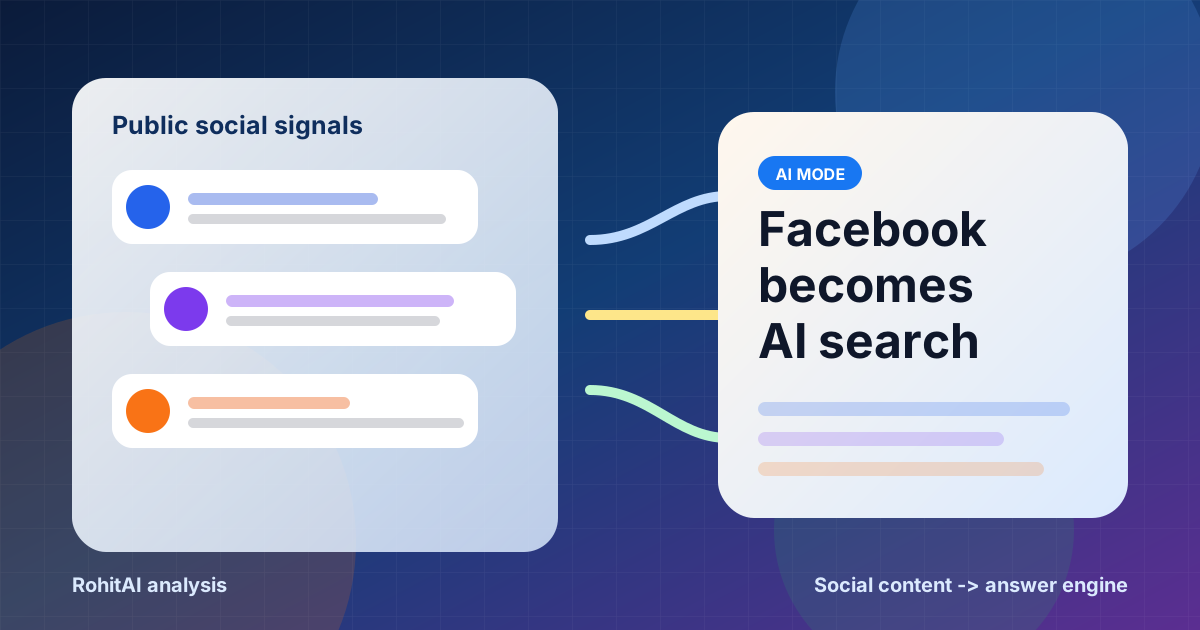
Meta's Facebook AI Mode turns public social content into answers. Here's how it works, why it matters, and what users should expect.
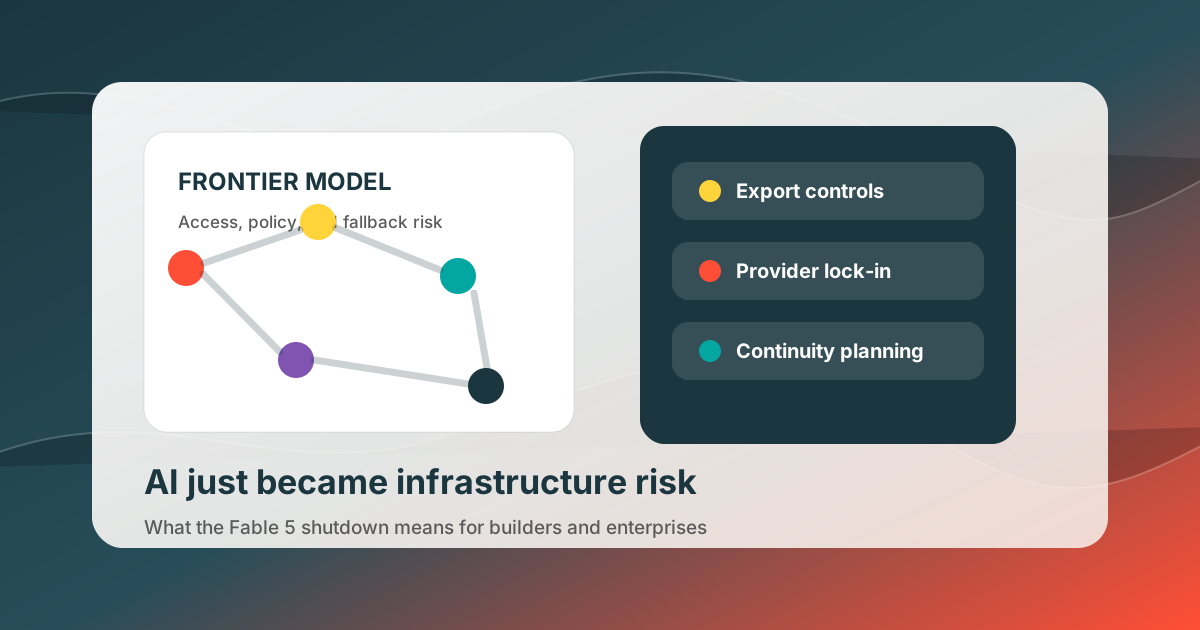
Why the U.S. forced Anthropic to shut off Fable 5 and Mythos 5, and what it means for India, builders, enterprises, and frontier AI access.