GPT-5.6, Mythos 5, and the New Frontier Access Regime

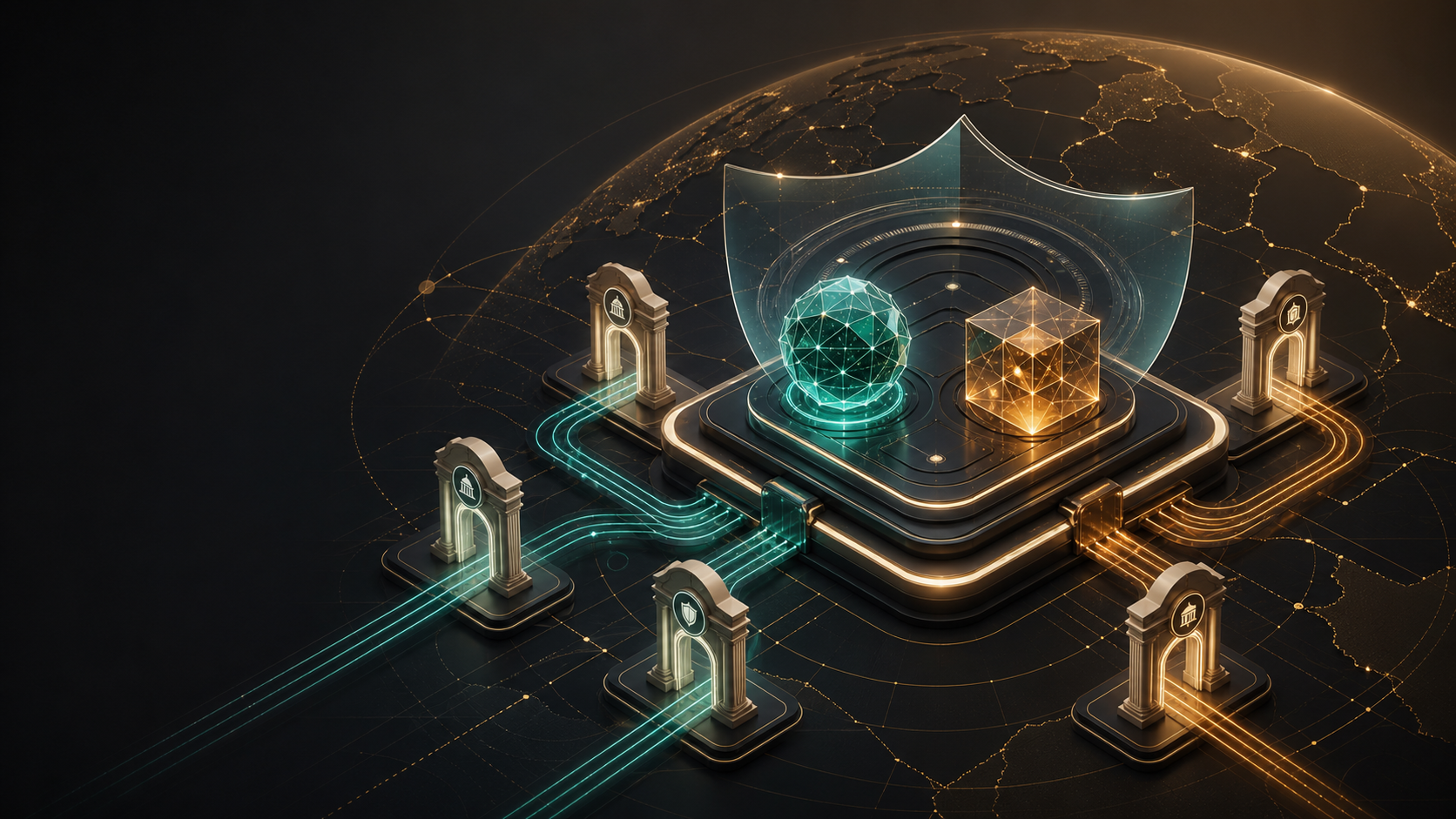
The biggest AI story this week is not that OpenAI has GPT-5.6, or that Anthropic's Mythos 5 is partially back.
The bigger story is that the release of frontier AI models is no longer a normal product launch.
In the old rhythm, an AI lab trained a better model, wrote a launch post, published benchmark charts, opened API access, and let developers fight about whether the new model was actually smarter. That rhythm is breaking. GPT-5.6 and Mythos 5 show a different pattern: powerful models are now being launched through access gates, government review, trusted-customer lists, jurisdiction rules, cybersecurity monitoring, and temporary exceptions.
This is not a side detail. It is the product now.
OpenAI's GPT-5.6 series is in limited preview. Anthropic's Mythos 5 is returning only for selected approved organizations after the U.S. government forced Anthropic to suspend Fable 5 and Mythos 5 access earlier in June. Fable 5, the public-facing Mythos-class model, remains restricted. OpenAI is arguing that this kind of government access process should not become the long-term default, while still cooperating during the preview window. Anthropic is working to restore broader access, but for now the lesson is clear: the most capable models are being treated as strategic infrastructure.
This post connects the whole story.
If you want the earlier chapters, I already covered them separately on RohitAI: the Claude Fable 5 and Mythos 5 launch, the Fable/Mythos shutdown as infrastructure risk, and the GPT-5.6 Sol/Terra/Luna release analysis. This article is not a rewrite of those posts. It is the synthesis: why these events are happening together, what they reveal, and what comes next.
There are two timelines that now overlap.
First, Anthropic released Claude Fable 5 and Claude Mythos 5 on June 9, 2026. Fable 5 was the public, safeguarded version of Mythos-class capability. Mythos 5 was the more restricted version for approved cyberdefense, infrastructure, and trusted-access users. Three days later, on June 12, Anthropic said the U.S. government had issued an export-control directive requiring it to suspend access to Fable 5 and Mythos 5 for foreign nationals, including foreign-national Anthropic employees. Because that was not practical to enforce while keeping normal commercial access alive, Anthropic disabled both models for all customers.
Now the government has partially softened that position. Reporting from TechCrunch, Axios, The Verge, Wired, AP, and others says the U.S. Commerce Department has allowed Mythos 5 to return for more than 100 approved U.S. organizations, including companies and government agencies. The exception appears narrow: Mythos 5 can be used by selected trusted organizations, and foreign-national employees inside those approved organizations may be allowed access under the new terms. Fable 5, the broader public-facing model, remains restricted as of June 27, 2026.
Second, OpenAI introduced GPT-5.6 as a limited preview. The model family includes Sol, Terra, and Luna. Sol is the flagship. Terra is the balanced model. Luna is the faster, lower-cost model. The official GPT-5.6 preview system card says OpenAI is treating all three as High capability in cybersecurity and biological/chemical risk under its Preparedness Framework, while not reaching the High threshold for AI self-improvement. Reporting says access is initially limited to trusted partners during a temporary U.S. government review.
These two events are not identical, but they rhyme.
Anthropic was forced into a broad shutdown, then got a partial Mythos exception. OpenAI appears to have accepted a limited preview before a wider launch. Both are now operating inside a new political reality: frontier models with strong cyber and bio capability will face access scrutiny before they reach ordinary users.
The simple answer is cybersecurity.
The better answer is that frontier models are becoming useful enough at high-impact technical work that governments no longer see them as ordinary SaaS.
A model that can help write better code is useful. A model that can inspect a huge codebase, reason through vulnerabilities, generate exploit paths, automate browser tasks, operate shells, test fixes, and summarize the risk to a security team is more than a writing assistant. It begins to look like dual-use capability.
That phrase, dual-use, is doing a lot of work. The same system can help defenders find and patch vulnerabilities faster. It can help hospitals, banks, cloud providers, open-source maintainers, and government teams harden systems. But if misused, similar reasoning can help attackers understand targets, chain vulnerabilities, or scale operations.
Bio and chemistry create the same governance problem. A model that helps legitimate researchers plan experiments and understand literature may also make dangerous knowledge easier to operationalize. The hard part is that the difference between safe and unsafe use is often not visible from the model weights alone. It depends on the user, the task, the context, the tools, the data, and the safeguards around the interaction.
That is why the new control point is not just model architecture. It is access.
A lab released a model, published benchmark claims, opened access broadly, then adjusted safeguards and limits as users discovered edge cases.
The model, customer list, jurisdiction, monitoring, safety testing, and government review process become one combined deployment package.
Cyber defenders, researchers, startups, and global partners often need the strongest tools. A blunt gate can slow the people it is supposed to protect.
OpenAI seems to have learned from the Anthropic chaos.
Instead of launching GPT-5.6 broadly and then being forced to pull it back, OpenAI is staging the release. The GPT-5.6 family is public enough to have a preview system card, a model story, pricing signals, and a clear naming structure. But access is limited. The normal developer experience is still not here for most people.
This is probably the safer political move. It lets OpenAI say: the model exists, the safety work has been done, the public deserves eventual access, but the company is cooperating with the temporary government process.
That is also why OpenAI's messaging matters. The company is not saying government review should become the permanent default. TechCrunch quoted OpenAI saying it does not believe this type of government access process should become the long-term norm because it keeps tools away from users, developers, enterprises, cyber defenders, and global partners who need them.
That is a subtle but important position. OpenAI is trying to hold two claims at once:
Both claims are rational. The problem is that once a temporary process exists, it can become permanent through habit.
Anthropic's path was more painful because the government intervention came after launch.
Fable 5 was supposed to be the public way to use Mythos-class capability with safeguards. Mythos 5 was already restricted. That should have been the compromise: give the public a safer model, give trusted cyberdefense partners the stronger interface, and keep monitoring sensitive categories.
The U.S. directive blew through that structure. By focusing on foreign-national access, it created an operational problem that Anthropic could not easily solve in normal commercial systems. If a SaaS service must instantly guarantee that no foreign national, inside or outside the United States, touches a specific model, the safest compliance path may be to remove the model for everyone.
The partial Mythos restoration is revealing because it does not restore the old world. It creates a smaller approved lane.
That lane is probably good news for U.S. cyberdefense teams and infrastructure providers who need the model. It is not a full win for developers, global enterprises, Indian users, European teams, or ordinary Claude users who lost Fable 5. It is a permissioned exception, not a general reopening.
For years, AI product tiers were mostly about price and power.
Cheap model. Fast model. Smart model. Pro model. Enterprise model.
Now the more important map is trust.
public access
  -> enterprise access
    -> verified enterprise access
      -> government-approved access
        -> cyberdefense / critical infrastructure access
          -> internal lab / red-team access
This is a different product architecture. The same capability layer may be exposed differently depending on who is asking, what they are doing, where they are located, whether they are verified, and whether a regulator has blessed the use case.
That creates a strange future: two users may pay the same lab but not really be using the same model. One gets the public version with refusals, fallback routing, and blocked tool categories. Another gets a trusted-access version with deeper cyber reasoning. A third gets a government or critical-infrastructure lane. A fourth gets no access because their country, employer, or identity status falls outside the approved perimeter.
This is not theoretical anymore. Fable/Mythos and GPT-5.6 are showing the shape.
| Layer | Who gets it | Why it exists | Risk |
|---|---|---|---|
| Public model | Consumers, indie builders, normal API users | Broad utility, distribution, ecosystem growth | May be weaker or more heavily filtered than advertised frontier capability |
| Enterprise model | Verified companies with contracts | Privacy, compliance, procurement, higher limits | Still exposed to government or vendor policy changes |
| Trusted cyber lane | Critical infrastructure, cyberdefense partners, selected agencies | Allow high-risk but socially useful defensive work | Gatekeeping, opaque selection, slower diffusion to smaller defenders |
| Government-reviewed preview | Approved preview customers | Test capability while limiting perceived national-security risk | Temporary review can harden into permanent permission politics |
| Internal frontier access | Lab employees, red teams, selected evaluators | Research, safety testing, model improvement | Export rules can even complicate internal staffing and safety work |
It is easy to dislike the bluntness of the intervention. I do dislike it. The Anthropic shutdown was disruptive, opaque, and globally confusing.
But the government concern is not imaginary.
Cybersecurity is not like a poetry benchmark. If a model makes exploit development, vulnerability discovery, or operational planning materially easier, that affects national security. If a model makes biological or chemical reasoning easier in dangerous ways, that also matters. A government that ignores those risks until after a public incident would be irresponsible.
The problem is not that the U.S. government cares. The problem is the missing process.
A durable process would need clear thresholds, technical evidence, appeal mechanisms, time limits, transparency reports, safe-harbor access for defenders, and international coordination. What we appear to have now is a half-built bridge: urgent directives, negotiated exceptions, approved lists, and public confusion.
That is not enough for a technology this important.
AI labs spent years saying frontier models could become strategically dangerous. Some of that was sincere safety work. Some of it was also useful positioning: it made their models seem powerful, important, and worthy of attention.
Now governments are taking them seriously.
That creates a trap. If a lab markets its model as capable of transforming coding, cybersecurity, science, automation, and economic productivity, a national-security bureaucracy may ask why the model is available globally with a credit card. If a lab says the model is safe, regulators may ask why the system card still rates it High in cyber and bio/chemical capability. If a lab says the model is dangerous, customers ask why they should build on it.
There is no clean way out. The only credible path is technical specificity.
Labs need to stop relying on broad vibes like safe, advanced, frontier, responsible, and trusted. They need to show what the model can do, what it cannot do, what was tested, who tested it, what mitigations exist, what access categories mean, and what happens when the government disagrees.
The developer lesson is blunt: do not treat a frontier model as a stable primitive just because the API works today.
A serious AI product now needs model resilience. That does not mean every company must support ten providers. It does mean the architecture should avoid hardcoding the business into one model with no fallback.
The practical checklist has changed.
The companies that handle this well will not necessarily be the ones with the fanciest prompts. They will be the ones with boring infrastructure: routing, evals, observability, fallback UX, contract language, and incident plans.
Cybersecurity is the main battlefield because it is the clearest dual-use domain.
The irony is that restricting the strongest models can hurt defenders first. Large banks, cloud providers, hospitals, software vendors, and government agencies need better tools for code review, vulnerability triage, incident response, log analysis, patch generation, and secure migrations. Smaller organizations need help even more because they do not have huge security teams.
If the best cyber-capable models are only available to a few approved institutions, the security gap can widen. Elite defenders get stronger. Everyone else waits.
That may be acceptable for a short preview window. It is dangerous as a permanent structure.
A better regime would distinguish between harmful assistance and defensive workflows. It would allow audited defensive use, bug fixing, secure code review, malware classification, incident response summaries, and vulnerability remediation while blocking exploit operationalization, stealth, persistence, credential theft, and targeting guidance.
That is technically hard. But it is better than treating all advanced security reasoning as one category.
The India angle matters because India is not a small edge case. It is one of the largest software, startup, IT services, enterprise technology, and AI adoption markets in the world.
When a U.S. government decision can remove frontier model access globally, Indian developers and enterprises see the dependency clearly. The answer is not to stop using OpenAI or Anthropic. That would be unrealistic. The best global models are still valuable.
The answer is layered sovereignty.
Use the best models where they make sense. Build fallback routes. Support open-weight and domestic models for critical workflows. Keep sensitive workloads portable. Invest in local compute. Avoid letting one foreign provider become the only path for customer support, software development, public services, cybersecurity, or regulated-sector automation.
This is not anti-American. It is normal infrastructure planning.
OpenAI and Anthropic now face a difficult strategic balance.
They need government trust because their models are powerful enough to attract national-security attention. They need developer trust because ecosystems die when builders feel locked out or surprised. They need enterprise trust because big customers need continuity. They need global trust because AI is a worldwide market, not only a U.S. procurement category.
Those goals can conflict.
If they move too fast, governments may intervene. If they move too slowly, competitors will eat the market. If they restrict access too much, developers move to open models or foreign alternatives. If they open access too broadly, they risk misuse and political backlash. If they speak too dramatically about capability, they invite controls. If they downplay capability, customers doubt the upgrade.
This is why the next frontier AI competition is not only benchmark performance. It is governance execution.
The winning lab will need three things at once:
A lab that has only the first one will struggle.
Here is my read.
First, GPT-5.6 will probably expand beyond the initial preview, but not in the old instant-everyone-gets-it way. Expect staged access: selected enterprise partners, then more API customers, then broader ChatGPT availability, with certain cyber/bio/tool-use behaviors still gated or monitored.
Second, Mythos 5 will remain more restricted than Fable 5. Anthropic will likely prioritize trusted cyberdefense and infrastructure users first because that is the easiest case to defend politically. Fable 5 may return later with tighter safeguards, stronger identity checks, or more fallback behavior in sensitive domains.
Third, model cards and system cards will become more important than launch posts. The real questions will be: what risk thresholds did the model hit, what mitigations exist, who evaluated it, and what access rules apply?
Fourth, government-approved customer lists will become controversial. Big companies and agencies will get access first. Smaller startups, independent researchers, non-U.S. companies, and open-source maintainers will ask why they are locked out of the tools needed to compete.
Fifth, open-weight models will gain strategic value even when they are weaker. Not because they always beat GPT-5.6 or Mythos 5, but because they offer control. If access stability matters, a slightly weaker self-hosted model may be better than a stronger model that disappears.
Sixth, enterprise AI contracts will start looking more like infrastructure contracts. Expect clauses about model withdrawal, export controls, emergency substitutions, access audits, data residency, government orders, and fallback support.
Seventh, frontier labs will become more careful with marketing. Every claim about cyber, biology, autonomy, or self-improvement can become evidence in a policy fight.
Eighth, the U.S. will try to preserve AI leadership while controlling diffusion. That is a hard balance. Over-control pushes users to foreign or open alternatives. Under-control increases real risk. The policy system is going to wobble before it stabilizes.
The most likely future is not a total ban or total freedom.
It is licensing by capability threshold.
Once a model crosses certain eval lines in cyber, bio, autonomy, or self-improvement, its release may trigger extra requirements. Those requirements might include pre-release notice, third-party testing, government briefings, restricted preview periods, customer verification, monitoring obligations, and incident reporting.
This could be good if done clearly. It could create trust, reduce panic, and let defensive users access strong tools. It could be terrible if done vaguely. Opaque permissioning can become political favoritism, incumbent protection, or a quiet export wall around the most important technology of the decade.
The difference will be process.
A healthy process has written standards, deadlines, evidence, independent review, narrow restrictions, and a path to broader access. An unhealthy process has phone calls, leaks, vague national-security claims, and customer lists nobody can challenge.
Right now, we are closer to the second than the first.
Do not wait for perfect policy. Build like model access can change.
For AI app builders, add provider routing and fallback evals now. For enterprise buyers, ask vendors for model continuity language. For security teams, build workflows that can degrade from frontier models to smaller models plus deterministic tools. For founders, be careful about product promises that depend on a restricted preview model. For developers, keep learning the strongest tools, but do not confuse preview access with a stable platform.
For policymakers, the message is different: make the process real. If frontier model review is going to exist, define it. Set deadlines. Publish non-sensitive evaluation categories. Protect defensive access. Avoid punishing allies and global developers without evidence. Do not let emergency governance become the default operating system of AI.
GPT-5.6 and Mythos 5 are important because they are powerful. But they are historic because of how they are being released.
The old frontier AI question was: which model is smartest?
The new question is: who gets access to the smartest model, what are they allowed to do with it, and who decides?
That is a much harder question. It touches cybersecurity, national sovereignty, enterprise reliability, developer ecosystems, scientific progress, public safety, and global competition.
My view is that some form of staged access is inevitable. The models are too capable, and the risks are too real, for every launch to be a simple public drop. But opaque, improvised, government-by-exception is not good enough either. It will frustrate builders, punish smaller players, and push serious users toward models they can control.
The best future is a middle path: strong safety testing, narrow restrictions, audited defensive access, transparent thresholds, fast review timelines, and broad public availability once the risks are handled.
The worst future is a closed club where only the largest companies and agencies get the frontier, while everyone else reads benchmark screenshots.
June 2026 may be remembered as the month frontier AI stopped being just software and became access-controlled infrastructure. The labs, governments, and builders who understand that shift first will shape the next phase.
Not broadly. GPT-5.6 Sol, Terra, and Luna are in limited preview as of June 27, 2026, with access restricted to selected trusted partners during a U.S. government review period.
Partially. Reporting says the U.S. Commerce Department has allowed Mythos 5 access for more than 100 approved U.S. organizations. This is not the same as broad public access.
Not broadly as of June 27, 2026. Fable 5 remains restricted while Anthropic works with the government to expand access.
The main stated concern is national security, especially cybersecurity and bio/chemical capability. OpenAI's GPT-5.6 system card treats Sol, Terra, and Luna as High capability in cyber and biological/chemical risk under its Preparedness Framework.
Functionally, yes, at least for frontier models. Formal rules are still evolving, but access to the most capable systems is already being shaped by government review, trusted partner programs, and export-control logic.
No. They are still extremely useful. But developers should build fallback paths, track model behavior, avoid one-provider lock-in for critical workflows, and understand that access can change for policy reasons.