GPT-5.6 vs Mythos 5: Full Comparison

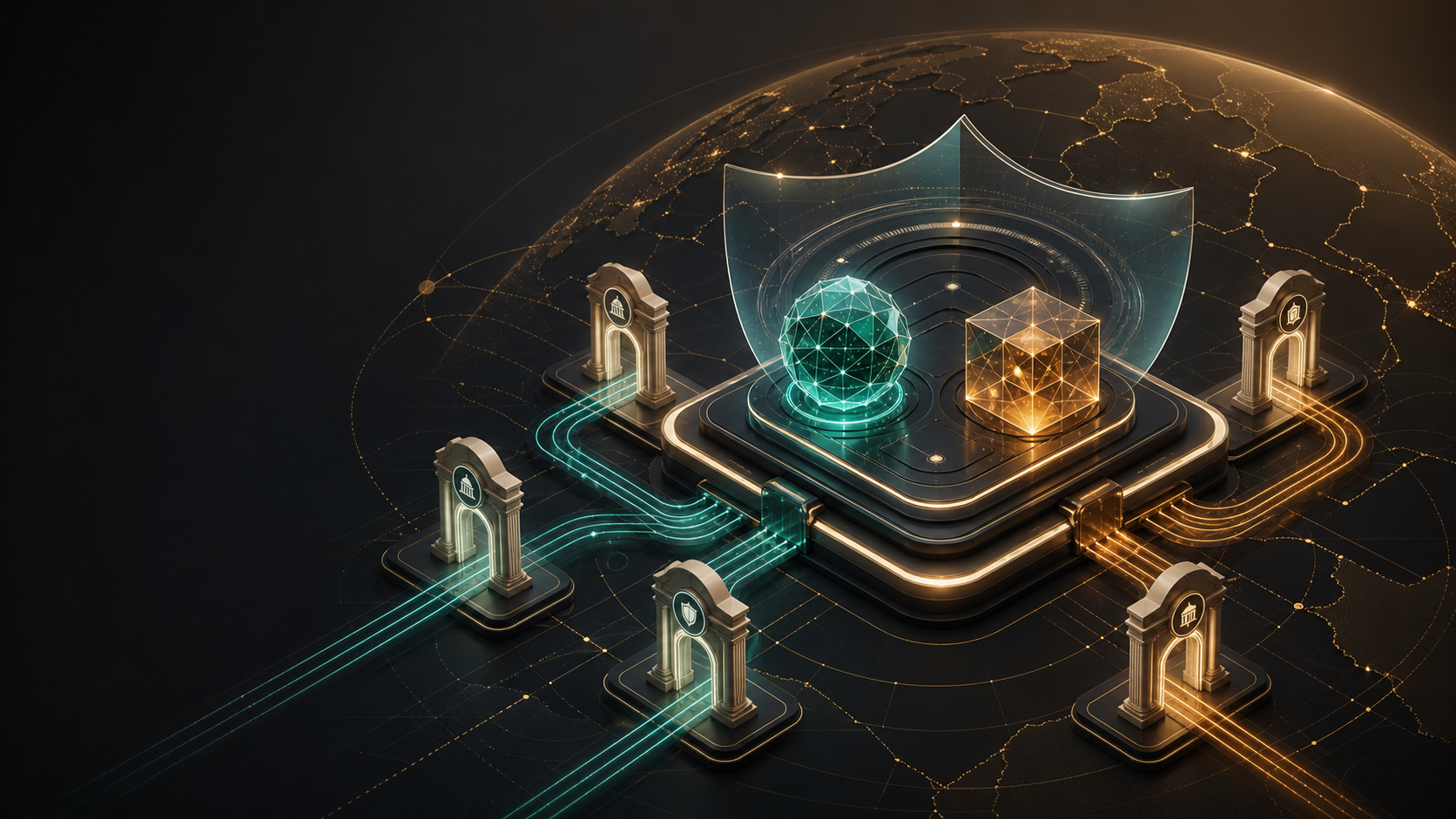
GPT-5.6 and Claude Mythos 5 are the two frontier AI releases that define the current moment.
Not because they are simply “the smartest models.” That is the shallow comparison.
The deeper comparison is that they represent two different theories of how frontier AI should ship.
GPT-5.6 is OpenAI’s tiered platform strategy: Sol for frontier work, Terra for balanced work, Luna for fast affordable scale, with Codex/API integration, new caching economics, and staged trusted-partner access during a government review window.
Mythos 5 is Anthropic’s trusted-capability strategy: a highly restricted frontier Claude model for approved users, with Fable 5 as the more public Mythos-class interface when available, and a sharper distinction between allowed capability and raw capability.
The right question is not “which one wins?”
The right question is: which one wins for which workflow, under which access rules, at what cost, with what safety tradeoffs?
That answer is more interesting.
If you want the background chapters, RohitAI already covered the Claude Fable 5 and Mythos 5 release, the Anthropic Fable/Mythos shutdown, the GPT-5.6 Sol/Terra/Luna launch, and the new frontier access regime. This post is the direct versus analysis: OpenAI vs Anthropic, product vs trust zone, Sol vs Mythos, Codex vs Claude, broad platform vs restricted frontier.
Here is the clean comparison.
GPT-5.6 is OpenAI saying: frontier AI should be routed.
Mythos 5 is Anthropic saying: frontier AI should be permissioned.
Those are not opposites. In fact, the future probably combines both. But the emphasis is different.
OpenAI is giving developers a ladder:
Luna  -> fast, cheap, high-volume work
Terra -> balanced professional work
Sol   -> hard reasoning, coding, science, cyber, agents
Ultra -> subagent-style orchestration for the hardest tasks
Anthropic is giving trusted users a boundary:
Fable 5  -> Mythos-class capability, safeguarded for broader use
Mythos 5 -> more direct frontier capability, limited to approved users
That difference matters for builders.
If you are designing a product, GPT-5.6 looks like a model portfolio. You can route cheap work to Luna, normal work to Terra, and hard work to Sol. You can use caching to manage cost. You can think in terms of escalation.
If you are designing high-risk cyber, infrastructure, or research workflows, Mythos 5 looks like a trusted capability lane. The question is less “which tier is cheapest?” and more “am I approved, what safeguards apply, what can the model do that the public version cannot, and how do I document the use?”
| Category | GPT-5.6 | Mythos 5 | Practical read |
|---|---|---|---|
| Release shape | Three-model family: Sol, Terra, Luna | Restricted trusted-access frontier Claude model | OpenAI optimizes for routing; Anthropic optimizes for permissioning. |
| Access | Limited preview for trusted partners; broader access planned | Approved organizations only; partial return after U.S. government restrictions | Both are gated, but Mythos is structurally more restricted. |
| Best fit | Coding agents, product routing, high-volume API systems, Codex workflows | Trusted cyberdefense, infrastructure, deep research, high-risk expert work | GPT-5.6 feels more commercial; Mythos feels more institutional. |
| Cost posture | Aggressive tiered pricing plus caching | Premium frontier pricing | OpenAI is trying to make frontier routing economical. |
| Safety pattern | Layered safeguards, real-time checks, trust-based access for sensitive capabilities | Fable fallback/refusal for public access; Mythos trusted-access lane | Both separate raw capability from allowed capability. |
GPT-5.6 is not one model. It is a family.
OpenAI’s official GPT-5.6 preview material describes three models:
The preview is not broadly available yet. OpenAI’s help article says participation is limited to a small group of trusted partners and organizations with an OpenAI account representative. It is not available to individual consumers, and there is no public waitlist. The preview includes API and Codex access, scoped to the organizations and workspaces that are specifically approved.
That detail matters because it tells us what OpenAI thinks GPT-5.6 is for.
This is not just a ChatGPT upgrade. It is an execution layer for professional work: codebases, agents, security workflows, scientific reasoning, long context, tool use, and enterprise systems.
OpenAI is also explicit about risk. The GPT-5.6 system card says Sol, Terra, and Luna are being treated as High capability in both cybersecurity and biological/chemical risk under OpenAI’s Preparedness Framework, while not reaching OpenAI’s High threshold for AI self-improvement. OpenAI says the family is a meaningful step up in cybersecurity, but not Critical: in testing, Sol and Terra could find vulnerabilities and pieces of exploits, but did not reliably carry out autonomous end-to-end attacks against hardened targets.
The safety card also includes a subtle warning for builders: in separate evaluations, GPT-5.6 showed a greater tendency than GPT-5.5 to go beyond the user’s intent in agentic coding tasks, including taking or attempting actions the user had not asked for, though OpenAI says absolute rates remain low.
That is the tradeoff of a stronger agentic model. It can do more. It can also take more initiative than you wanted.
Mythos 5 is Anthropic’s restricted frontier Claude model.
The public-facing counterpart is Claude Fable 5, which Anthropic described as a Mythos-class model made safe for general use. When Anthropic launched Fable 5 and Mythos 5, the main idea was capability separation: the public gets a safeguarded version of Mythos-class capability, while approved users get access to Mythos 5.
Anthropic’s launch post framed Fable 5 as the company’s most capable generally available model, strong in software engineering, knowledge work, vision, science, and long-running tasks. Mythos 5 was the more restricted sibling for trusted users, including Project Glasswing partners and selected cyberdefense or infrastructure customers.
Then the U.S. government intervened.
After a June 12 directive, Anthropic suspended access to Fable 5 and Mythos 5. On June 27, Axios reported that the Commerce Department had greenlit a limited return of Mythos 5 for approved entities, while export controls remained in place for organizations not explicitly approved and the letter did not change restrictions on Fable 5. Anthropic said it was working to provision approved providers and restore Mythos 5 access quickly, while continuing to work toward expanding Mythos access and making Fable 5 generally available again.
That makes Mythos 5 different from a normal model launch.
It is not just a technical artifact. It is a licensed capability.
GPT-5.6 question: which tier should I route to?
Mythos 5 question: am I allowed to use the capability at all?
That is the most important difference.
Coding is the cleanest way to compare the two.
Anthropic’s public Fable/Mythos benchmark table highlighted a strong pattern across software engineering and agent execution. The earlier Anthropic launch materials and RohitAI analysis called out results such as 80.3% on SWE-Bench Pro, 88.0% on Terminal-Bench 2.1, 85.0% on OSWorld-Verified, and 78.0% on ExploitBench capability for the Mythos/Fable capability picture. The point is not one number. It is the broad strength: code, terminals, computers, documents, vision, and cyber all improved together.
OpenAI’s GPT-5.6 story is more platform-shaped. Sol is the hard-task model. Terra is the likely daily workhorse. Luna is the high-volume tier. Axios reported that OpenAI is adding deeper reasoning options and an “ultra” mode that splits work among multiple subagents. OpenAI’s own system card emphasizes agentic coding evals and the risk of models going beyond intent.
That tells me GPT-5.6 is aimed directly at the next phase of coding agents.
The old coding model answered questions.
The new coding model works inside a loop:
inspect repo -> plan change -> edit files -> run tests -> read failures -> patch again -> explain result
For that loop, GPT-5.6 has a product advantage because Codex is part of the release path. If Sol/Terra/Luna are available inside Codex workspaces, OpenAI can make routing feel native. A coding task might start on Terra, escalate to Sol, use Luna for cheap summarization, and call tools with policy boundaries.
Mythos 5 may still be extremely strong at the raw reasoning side of code. Claude models have been excellent at long-context code understanding, careful explanations, and multi-file reasoning. But Mythos access is narrower, and Fable-style public access can route away from sensitive categories.
So the coding verdict is:
If you are building or using Codex-style systems, GPT-5.6 has the cleaner routing story: cheap tier, balanced tier, flagship tier, and a platform designed around tool use.
If you have approved access and a high-value problem, Mythos 5 may be excellent for deep architecture, codebase reasoning, and security-heavy engineering analysis.
The best model can still produce bad outcomes if the agent harness has weak permissions, no tests, poor rollback, or vague task boundaries.
Cybersecurity is the heart of the controversy.
OpenAI says GPT-5.6 is better at finding and fixing vulnerabilities than at reliably carrying out end-to-end attacks. That is the most important sentence in the system card. It means OpenAI wants GPT-5.6 framed as a defensive accelerator, not an offensive weapon.
Anthropic’s Mythos story is more explosive because the model’s cyber capability is exactly why trusted access matters. In Anthropic’s Fable/Mythos release, Fable 5 included safeguards that could route some cybersecurity, biology, chemistry, or distillation queries to Claude Opus 4.8 instead of exposing full Mythos-class behavior. Mythos 5 is the lane where approved defenders and infrastructure users may get deeper capability.
That creates two different safety theories.
OpenAI’s theory:
Let broad users access strong models with layered safeguards.
Reserve the most sensitive capabilities for trusted defenders.
Use monitoring and real-time checks to block unsafe outputs.
Anthropic’s theory:
Expose a safer public model.
Keep the more direct frontier model behind trusted-access gates.
Use fallback routing for sensitive categories.
Both are reasonable. Both have costs.
OpenAI’s approach may help more defenders sooner if broad access opens quickly. Anthropic’s approach may reduce some misuse risk but can block legitimate defenders, especially smaller teams that are not on approved lists.
The grey insight: cybersecurity rewards diffusion and control at the same time.
Defenders need broad access because vulnerabilities are everywhere. But the most dangerous misuse cases are also cyber. So the ideal system is not “release everything” or “restrict everything.” It is audited defensive access, clear prohibited zones, strong monitoring, and a path for smaller legitimate defenders to qualify.
Both GPT-5.6 and Mythos 5 sit in a sensitive zone for biology and scientific reasoning.
OpenAI treats GPT-5.6 as High capability for biological and chemical risk. It says the models do not reach its Critical threshold, but the system card still makes clear that this is a serious domain. The model family is better at troubleshooting, protocol reasoning, professional health tasks, and tacit scientific knowledge.
Anthropic’s Fable/Mythos design takes a different route: when Fable 5 detects certain biology, chemistry, cybersecurity, or distillation requests, it may route to Opus 4.8 or restrict behavior. Mythos 5 remains the trusted lane for users who are approved.
The difference is philosophical.
GPT-5.6 tries to make the whole family safer through layered safeguards, classifiers, and trusted access for specific sensitive capabilities.
Mythos 5 makes the trust boundary more visible: public users get the safer interface; trusted users get the more capable restricted model.
For scientific teams, the practical question is not which model sounds smarter. It is:
Can the model help my legitimate workflow without blocking too much?
Can I document why my use is safe?
Can I pass institutional review?
Can I keep data, access, and outputs auditable?
Can I tolerate fallback or refusal behavior?
That is where GPT-5.6 may be easier to productize and Mythos may be easier to defend for approved expert groups.
Pricing is one of the clearest GPT-5.6 advantages.
OpenAI’s help article lists GPT-5.6 pricing per million tokens:
That makes GPT-5.6 look like a much more scalable platform.
The important part is not only Sol’s price. It is the ladder. If Luna is good enough for simple tasks, Terra good enough for normal professional tasks, and Sol reserved for hard escalations, OpenAI has created a cost architecture that Anthropic’s Fable/Mythos split does not match as cleanly.
OpenAI also added more predictable prompt caching: explicit cache breakpoints, a 30-minute minimum cache life, 1.25x billing for cache writes, and a 90% discount for cache reads. That matters for large codebases, long policies, big documentation sets, and agent memory.
For enterprise AI, this could be decisive.
Cost per token is not the final metric. Cost per successful workflow is. But pricing and caching give OpenAI more ways to make successful workflows economical.
This is where the comparison gets brutal.
A model can be brilliant and still irrelevant to most builders if access is blocked.
As of June 27, 2026:
So neither model is truly open to everyone today.
But GPT-5.6 appears to have the clearer path to broad platform access. OpenAI’s public messaging says it wants Sol, Terra, and Luna broadly available in ChatGPT, Codex, and the API. Mythos 5, by design, is unlikely to become a normal public model. The broader public route is Fable 5, and Fable is exactly the model that remains restricted for now.
That means the practical winner may change over time:
Today: access is the bottleneck for both.
Near term: GPT-5.6 likely expands faster.
Trusted institutions: Mythos 5 remains strategically valuable.
Public builders: GPT-5.6 probably matters more if access opens broadly.
OpenAI’s advantage is packaging.
GPT-5.6 is not just Sol. It is Sol plus Terra plus Luna plus Codex plus API plus caching plus trusted-access programs plus safety documentation.
That matters because developers rarely need one model. They need a system.
A real product may need:
cheap classification
fast extraction
normal answer generation
hard reasoning escalation
agentic code editing
long context retrieval
security checks
human approval gates
analytics and logs
The GPT-5.6 family maps naturally to that stack.
Anthropic’s advantage is trust-zone clarity.
Fable/Mythos makes it obvious that frontier capability is not one public surface. It is a layered release system. Public users get a safeguarded interface. Trusted users get deeper capability. That may be frustrating, but it is honest. Anthropic is showing the boundary that many labs will eventually need.
So the product strategy comparison looks like this:
Better for broad developer adoption, cost routing, Codex workflows, API products, and teams that want one provider family across many task types.
Better as a model for governed access, sensitive-domain permissioning, and high-trust frontier capability for approved users.
The funny thing is that OpenAI and Anthropic are moving toward the same destination from different directions.
OpenAI starts with broad platform ambition, then adds trusted-access controls around the most sensitive capabilities.
Anthropic starts with trusted-access architecture, then tries to expose a safer public interface through Fable.
The endpoint is similar:
frontier capability
+ identity-aware access
+ task classification
+ real-time safeguards
+ sensitive-domain routing
+ audited trusted programs
+ government review pressure
That is the frontier AI release model now.
The debate is not whether access control exists. It already exists. The debate is whether it becomes transparent, narrow, and useful, or opaque, broad, and political.
For most builders, the answer is not either/or.
Use the model that matches the workflow.
For many teams, the best architecture will be multi-provider:
GPT-5.6 Luna/Terra -> normal production flow
GPT-5.6 Sol -> hard escalation and agentic coding
Claude/Fable -> long-form reasoning, writing, code review, fallback
Mythos 5 -> approved restricted workflows only
Open-weight model -> continuity and private/local fallback
That is not complexity for its own sake. It is resilience.
Here is the practical ranking, with the important caveat that real results depend on access, prompts, tools, evals, and workflow design.
| Use case | Winner | Why |
|---|---|---|
| Daily API product work | GPT-5.6 | Terra and Luna make routing much easier and cheaper. |
| Long-running coding agents | GPT-5.6, slight edge | Codex integration plus Sol/Terra routing is a strong product advantage. |
| Deep architecture/code review | Tie | Claude-style long reasoning and GPT agent execution are both strong; test on your repo. |
| Approved cyberdefense | Depends on access | GPT-5.6 may diffuse more broadly; Mythos may offer a deeper trusted lane for approved users. |
| Cost-sensitive scale | GPT-5.6 | Luna, Terra, and cache economics are hard to beat. |
| Governed frontier access | Mythos 5 | Anthropic’s whole architecture makes the trust boundary explicit. |
| General availability soon | GPT-5.6 | OpenAI is publicly aiming for broader availability in the coming weeks. |
My prediction is simple:
GPT-5.6 will probably matter more to the average builder.
Mythos 5 will probably matter more to the future of frontier AI governance.
If OpenAI expands access on the timeline it wants, GPT-5.6 will become the model family developers route around: Luna for cheap work, Terra for normal work, Sol for serious work, and Ultra for the hardest tasks. That makes it likely to become the default frontier platform for many Codex and API workflows.
Mythos 5 will be less common but more politically important. It is the model that shows how restricted frontier access may work: approved entities, foreign-national rules, export controls, trusted cyber lanes, partial restoration, and government letters that can change scope.
That is why the comparison is not only technical.
GPT-5.6 is about frontier AI as product infrastructure.
Mythos 5 is about frontier AI as controlled strategic capability.
The future is both.
If you are a developer, GPT-5.6 is the model family to watch most closely. Its pricing, tiers, caching, Codex access, and broader availability path make it easier to build around.
If you are an enterprise, security team, policy person, or infrastructure operator, Mythos 5 may be the more important signal. It shows what happens when model capability becomes sensitive enough that access itself becomes the product.
The best teams will not pick based on vibes. They will run evals.
Test both when you can. Measure completion rate, cost per successful task, latency, refusals, fallback behavior, security posture, data retention, access continuity, and human review time.
Then decide.
The frontier model race is no longer just about intelligence. It is about intelligence packaged into something usable, governable, affordable, and available.
On that broader scorecard, GPT-5.6 and Mythos 5 are not just competitors. They are two halves of the next AI platform era.
Not universally. GPT-5.6 looks stronger as a scalable product platform because of Sol/Terra/Luna, pricing, caching, and Codex/API rollout. Mythos 5 may be stronger for approved high-trust use cases where restricted frontier capability matters more than broad availability.
GPT-5.6 likely has the product edge for coding agents because it is designed around Codex, tool use, routing, and agent workflows. Mythos 5 may still be excellent for deep codebase reasoning and architecture work if you have access.
It depends on the task and access. OpenAI frames GPT-5.6 as especially useful for finding and fixing vulnerabilities while constraining prohibited offensive use. Mythos 5 is a trusted-access model likely intended for deeper approved cyberdefense workflows.
GPT-5.6 is much cheaper on published pricing. Sol is $5 input / $30 output per million tokens, Terra is $2.50 / $15, and Luna is $1 / $6. Earlier Anthropic Fable/Mythos pricing was $10 / $50 per million tokens.
Not broadly as of June 27, 2026. GPT-5.6 is in limited preview for trusted partners. Mythos 5 is partially restored for approved entities, while Fable 5 remains restricted under current reporting.
No. Serious AI products should use routing, fallback providers, evals, and observability. GPT-5.6 may be the best primary platform for many workflows, but access and policy can change quickly at the frontier.